


Why Your Toothpaste Tube Can't Be Recycled
Here is a small, well-meaning routine most of us have performed: squeeze the last of the toothpaste out, rinse the tube under the tap, drop it in the recycling bin, feel a flicker of virtue. Done your part.
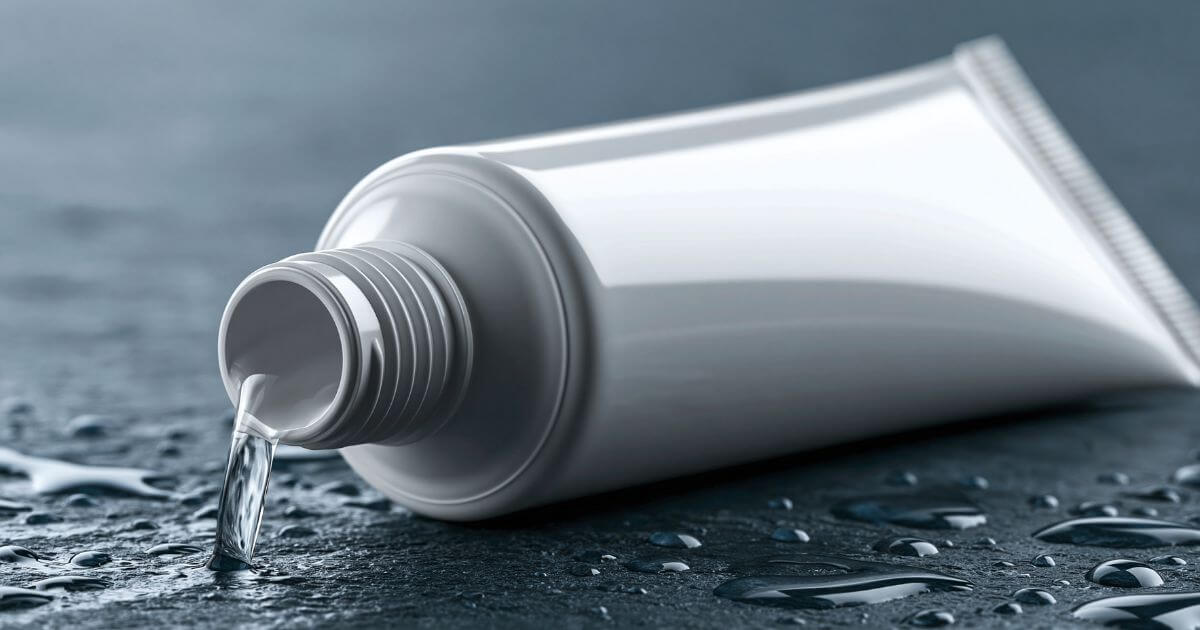
Except the tube almost certainly did not get recycled. It went to landfill, the same place it would have gone if you had thrown it in the trash. The rinse changed nothing. And the reason why is a small engineering decision made over a century ago that nobody warned you about.
The problem is hiding inside the wall of the tube
Cut a standard toothpaste tube open and you will not find one material. You will find a sandwich: layers of different plastics bonded to a paper-thin sheet of aluminum. That metal layer is there for a good reason. It blocks light and air, which keeps your paste stable on the shelf for a couple of years.
Good for shelf life. Catastrophic for recycling. Recycling plants are built to process single, separable materials. A fused plastic-and-aluminum laminate cannot be cleanly pulled apart, and doing it by hand is far too slow and expensive to be worth anyone's while. So the machines do the only thing they can: kick it out. Add a smear of leftover paste that has to be cleaned off first, and the tube becomes, in recycling terms, a lost cause.
This is the quiet truth of the category: most toothpaste tubes are simply not recyclable, no matter how diligently you rinse.
The scale is the part you will not be able to un-know
Once you understand that nearly every tube ends in a landfill, the numbers land differently:
- An estimated 1.5 billion toothpaste tubes are discarded worldwide every year. By some industry counts, closer to 20 billion are produced annually, as recounted in David Pogue's reporting on the toothpaste tube problem.
- The UK alone throws away around 300 million tubes a year. Laid end to end, that is enough to wrap nearly twice around the planet, per the British Dental Journal.
The ones that miss the landfill are not better off. The Ellen MacArthur Foundation has projected that on current trends there could be more plastic than fish, by weight, in the ocean by 2050.
The "recyclable" label is mostly a promise for later
You may have noticed newer tubes stamped "recyclable." That is real progress, and it has a genuinely uplifting backstory. Colgate spent five years and millions of dollars engineering a tube made entirely from the easy-to-recycle plastic used in milk jugs, with no metal layer, then did something almost unheard of in consumer goods: it gave the patent away, so competitors could copy it. By that account, roughly 90% of the industry is now moving toward recyclable tubes.
Here is the catch worth knowing. "The industry is switching" is not the same as "switched." And "recyclable" on the label is not the same as "your local facility actually accepts it." Many municipal recyclers still reject all toothpaste tubes on sight, recyclable HDPE ones included, because they are not set up to verify which is which. The label is a future tense pretending to be a present one.
What you can actually do today
Short of waiting for the whole industry to finish catching up, you have a few real options:
- Mail-back programs. TerraCycle and several brand take-back schemes accept used tubes and brushes for specialized recycling. It works, but it requires you to collect and ship them yourself.
- Check your local rules. Look up whether your specific facility accepts tubes before you bin-and-hope. Most do not.
Individual effort helps at the margins.
A format without the tube
That is the premise behind Mouth OS: a dissolvable toothpaste film, powered by A.C.E. Technology™, sold as individually sealed Precision Doses in a box instead of a collapsible tube.

Toothpaste, reinvented. This is The End of the Tube.
The takeaway
You were not wrong to rinse the tube. You were just never told that the tube was designed, decades before you were born, in a way that made recycling close to impossible. The good news is that the design is finally being questioned, slowly by the giants and faster by the formats willing to throw the tube out entirely.
For the full picture of why the paste inside is mostly water, read why your toothpaste is mostly water. And for the human cost behind all of this, see what the oral-health numbers actually say.
Frequently asked
Can you recycle toothpaste tubes?
Usually not. Most are a fused laminate of plastics and aluminum that standard recyclers cannot separate. Some newer tubes use recyclable HDPE, but many local facilities still reject all tubes, so check your specific program or use a mail-back service like TerraCycle.
How long does a toothpaste tube take to decompose?
Around 500 years, on current estimates. A 2021 British Dental Journal news report, citing the UK waste management company Business Waste, puts the average time for a toothpaste tube to fully break down in landfill at 500 years.
How many toothpaste tubes are thrown away each year?
An estimated 1.5 billion worldwide annually, with around 300 million in the UK alone. Some industry estimates put total tubes produced near 20 billion a year.
Mouth OS Mint Frost is a waterless dissolvable toothpaste film. See how the format works.
Sources: British Dental Journal, "300 million toothpaste tubes go to landfill" (2021), citing Business Waste; "The Multimillion-Dollar Toothpaste Tube," Unsung Science (2023); Ellen MacArthur Foundation, ocean plastics projection; industry sustainability reporting on toothpaste tube materials.

Written by Joshua Stancle

Leave a comment
This site is protected by hCaptcha and the hCaptcha Privacy Policy and Terms of Service apply.