

Article: Your Toothpaste Is Mostly Water. Here's the Problem.
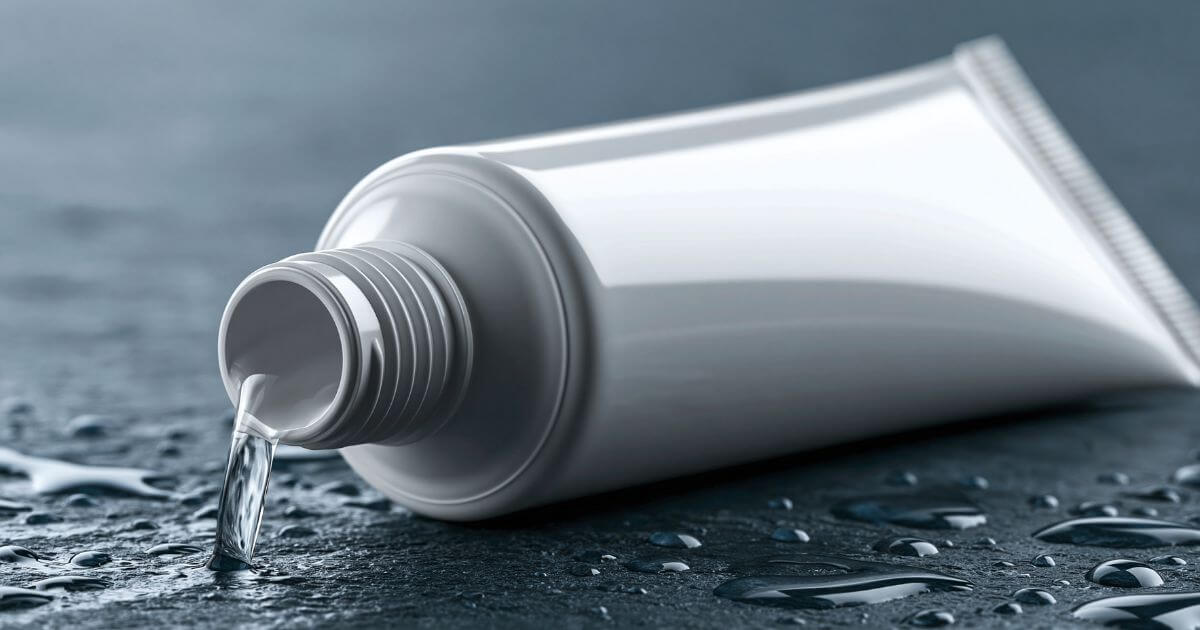
Your Toothpaste Is Mostly Water. Here's the Problem.
Pick up the tube sitting on your sink. Read the back. Somewhere near the top of the ingredient list, often the very first line, is a word you would never expect to pay for: water.
Not a trace. Not a splash. In most conventional toothpaste, water is one of the two largest ingredients by volume. You have been buying it, squeezing it, and rinsing most of it down the drain your entire life. And almost nobody talks about it.
Let's talk about it.
A 130-year-old design nobody bothered to question
The collapsible toothpaste tube was patented in the 1890s. Since then, phones went from rotary dials to pocket supercomputers, cars learned to drive themselves, and your toothpaste… got a new flavor. The format never changed. We just kept squeezing.
That inertia carries a cost. Three of them, actually. What is in the paste. What the category is (and is not) doing for the world's mouths. And where the tube ends up when you are done. Run the numbers on all three, and the humble tube starts to look less like a staple and more like a design that overstayed its welcome.
So how much of my toothpaste is actually water?
More than you would guess. Water by itself typically makes up somewhere between 20% and 45% of toothpaste by weight. Add the humectants, the ingredients that keep paste from drying into a brick, and that water-and-carrier base together accounts for roughly 75% of the volume in the tube, according to dental-industry breakdowns of toothpaste composition. In other words: water alone is up to nearly half, and the full carrier base is about three-quarters.
Read that again. The majority of what is in a tube of toothpaste is not the part that cleans your teeth. It is the carrier: the stuff that turns active ingredients into a smooth, squeezable gel and buys them a long shelf life. Useful for the factory. Less useful for you, because a meaningful share of those actives gets diluted before it ever reaches your enamel, then spat into the sink seconds later.
Put bluntly: you are paying premium prices, by weight, for water you immediately rinse away.

The stakes are bigger than your bathroom
Here is where it stops being a quirky factoid and becomes a genuine public-health story.
According to the World Health Organization, close to 3.5 billion people, roughly half the planet, live with some form of oral disease. Untreated tooth decay in permanent teeth alone affects an estimated 2 billion people, and another 514 million children have decay in their baby teeth, per the WHO's oral health data. Oral disease has been the single most prevalent health condition on Earth since 1990, and the Global Burden of Disease analysis in The Lancet puts the combined toll above the next several most common noncommunicable diseases.
The price tag is staggering too: in 2019, oral conditions cost the world an estimated $387 billion in direct treatment and another $323 billion in lost productivity. (We dig into what the oral-health numbers actually say in a separate piece.)
None of this makes your tube of toothpaste the villain. It makes one thing clear: the status quo is not winning. Half the world brushes and still struggles. When a habit nearly everyone shares produces results like that, it is fair to ask whether the tools deserve a rethink.
And then there is the tube itself
Even if the paste were flawless, the package is a problem.
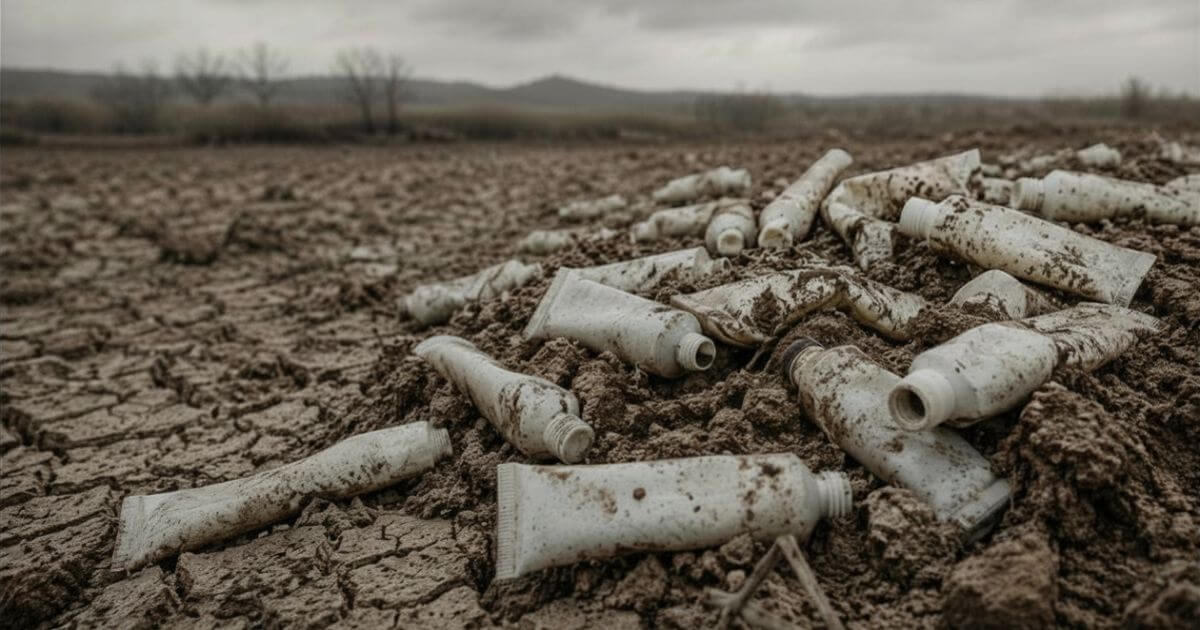
Most toothpaste tubes are built from layers of different plastics fused to a thin sheet of aluminum. That laminate is what keeps your paste fresh. It is also what makes the tube nearly impossible to recycle, because standard facilities cannot pull the materials apart. So they do not. They landfill them. (Here is the full story on why your toothpaste tube can't be recycled.)
The scale is hard to picture:
- An estimated 1.5 billion toothpaste tubes are thrown away every year worldwide. (By some industry counts, closer to 20 billion are produced annually.)
- The UK alone discards around 300 million a year. Laid end to end, that is nearly twice around the Earth, as reported in the British Dental Journal.
- Each tube takes roughly 500 years to break down in a landfill.
Sit with that last one. Every tube you have personally used, going back to childhood, is in all likelihood still intact in the ground somewhere. It will outlive you, your children, and your grandchildren, several times over.
Every toothpaste tube you have ever used is probably still sitting in a landfill, and will be for the next five centuries.
So what would a better version look like?
Strip the problem to its parts and the fixes get obvious. Remove the water, and you no longer need a tube to hold a wet paste together. Remove the tube, and the landfill math changes. Deliver the actives in one precise dose, and nothing gets diluted into a sink drain.
That is the thinking behind Mouth OS: a waterless, tubeless dissolvable film. One thin film, one dose, powered by A.C.E. Technology™. It activates with your saliva and your toothbrush. No water filler. No laminate tube to bury. It is a small object built around a simple idea: bring what your mouth actually uses, and leave out what it does not, starting with the water and the tube.

Toothpaste, reinvented. This is The End of the Tube.
The takeaway
You do not need to feel guilty about the tube on your sink. You just deserve to know what is in it: mostly water, wrapped in a package that will outlast you by five centuries, sold into a world where half of all mouths are still struggling. The design is old. The math is bad. And for the first time in a hundred years, there is a reason to expect more.
Frequently asked
How much of toothpaste is water?
In most conventional formulas, water by itself makes up roughly 20% to 45% of toothpaste by weight. Combined with humectants, that water-and-carrier base can account for about 75% of the tube's volume, meaning the majority of what you buy is not the active part that cleans your teeth.
Are toothpaste tubes recyclable?
Usually not. Most tubes are a fused laminate of multiple plastics and a thin aluminum layer, which standard recycling facilities cannot separate. An estimated 1.5 billion tubes are landfilled each year worldwide, and each one takes roughly 500 years to break down.
What is a dissolvable toothpaste film?
It is a waterless, single-dose alternative to paste: a thin film that dissolves as you brush, with no water filler and no plastic-and-aluminum tube. Mouth OS Mint Frost is one example of this format.
Mouth OS Mint Frost is almost here. Join the launch list to be first when it goes live.
Sources: World Health Organization, Oral Health fact sheet and Global Oral Health Status Report (2022); Global Burden of Disease oral conditions analysis, The Lancet (2024); British Dental Journal, "300 million toothpaste tubes go to landfill" (2021); dental-industry toothpaste composition references.

Written by Joshua Stancle

Leave a comment
This site is protected by hCaptcha and the hCaptcha Privacy Policy and Terms of Service apply.